PROJECT 02
Rube Goldberg Machine
Background
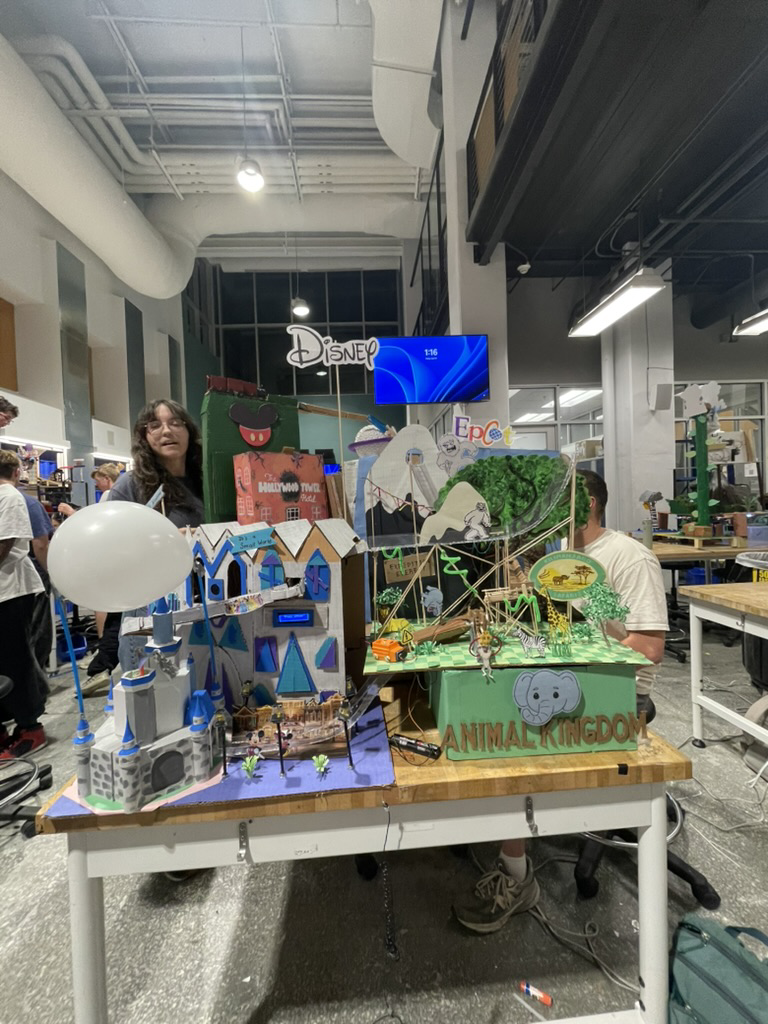
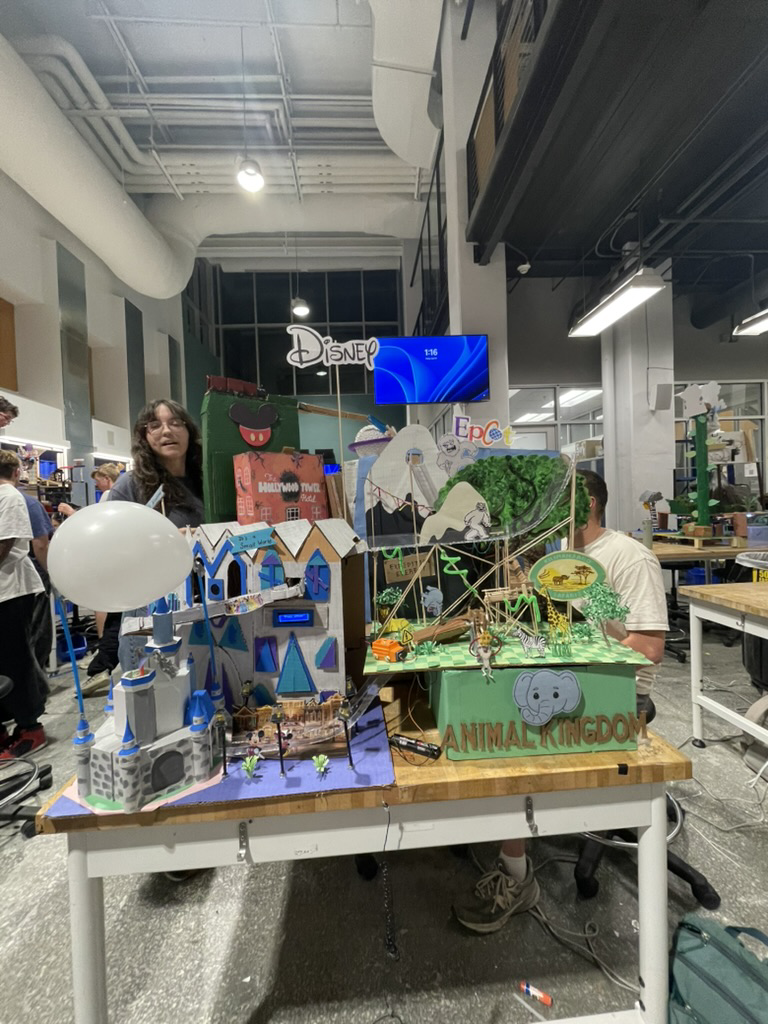
As part of EGR 121, I worked on a four-person team to design and build the Animal Kingdom section of a collaborative Disney World–themed Rube Goldberg machine. Four teams combined their independently designed sections into a single machine, with each section representing one of the four Walt Disney World parks: Hollywood Studios, EPCOT, Animal Kingdom, and Magic Kingdom. Our challenge was not only to create a reliable sequence of mechanical actions, but also to integrate required electronics and Arduino-controlled components while ensuring that our section could receive an input from the preceding team's machine and successfully trigger the next section.
Design
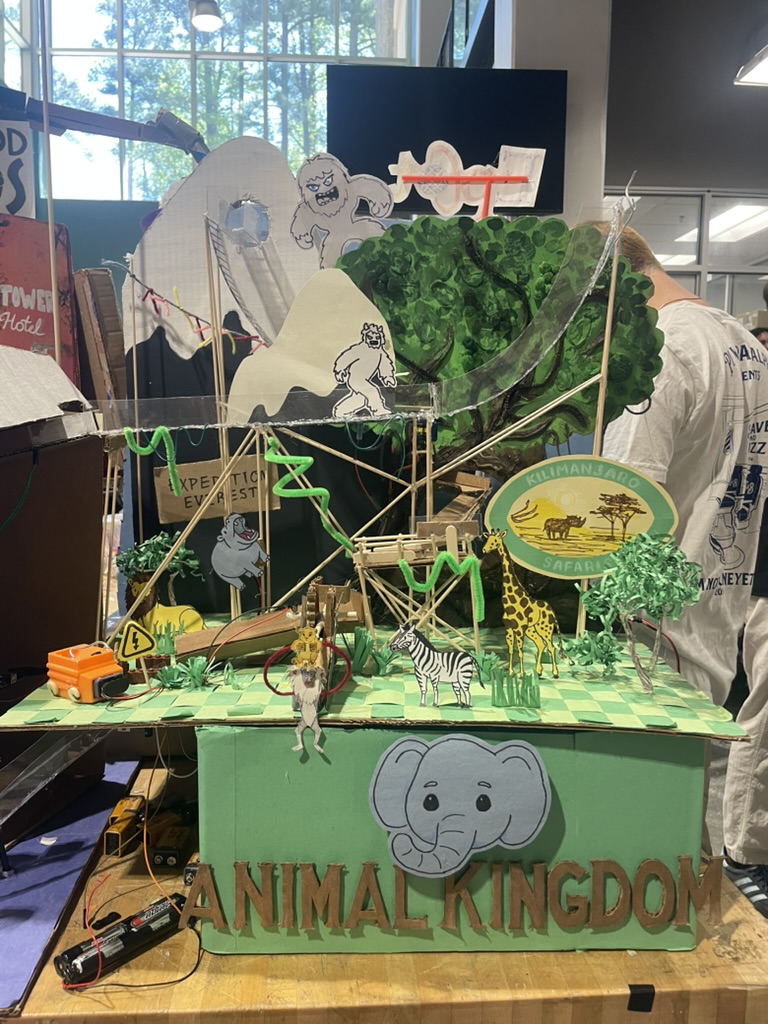
Our Animal Kingdom section drew inspiration from Expedition Everest, Kilimanjaro Safaris, and the Tree of Life, incorporating these attractions into both the machine's physical design and its sequence of actions. The completed build used ramps, rolling objects, moving mechanisms, themed scenery, sensors, and electronic outputs to transform a simple initial trigger into a chain of mechanical and electrical events.
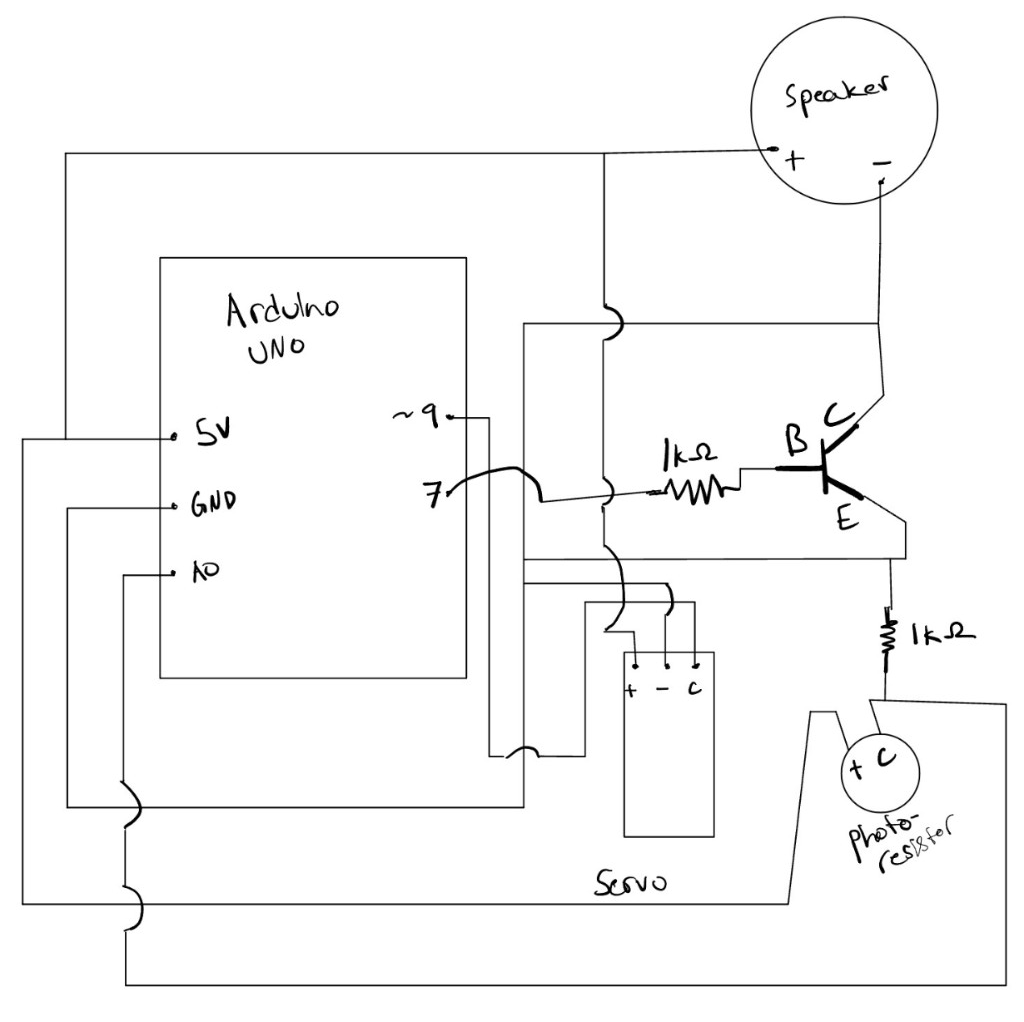
Two major electronic interactions were integrated into the sequence. In the Expedition Everest portion, a rolling ball passed over a photoresistor, triggering a transistor-controlled circuit connected to the Arduino. The system produced multiple outputs: a speaker played a dynamic sound effect, LEDs in the Yeti's eyes flashed, and a servo redirected the ball onto a new path. The project's wiring schematic documents the integration of the Arduino Uno, photoresistor, servo, speaker, and transistor circuitry.
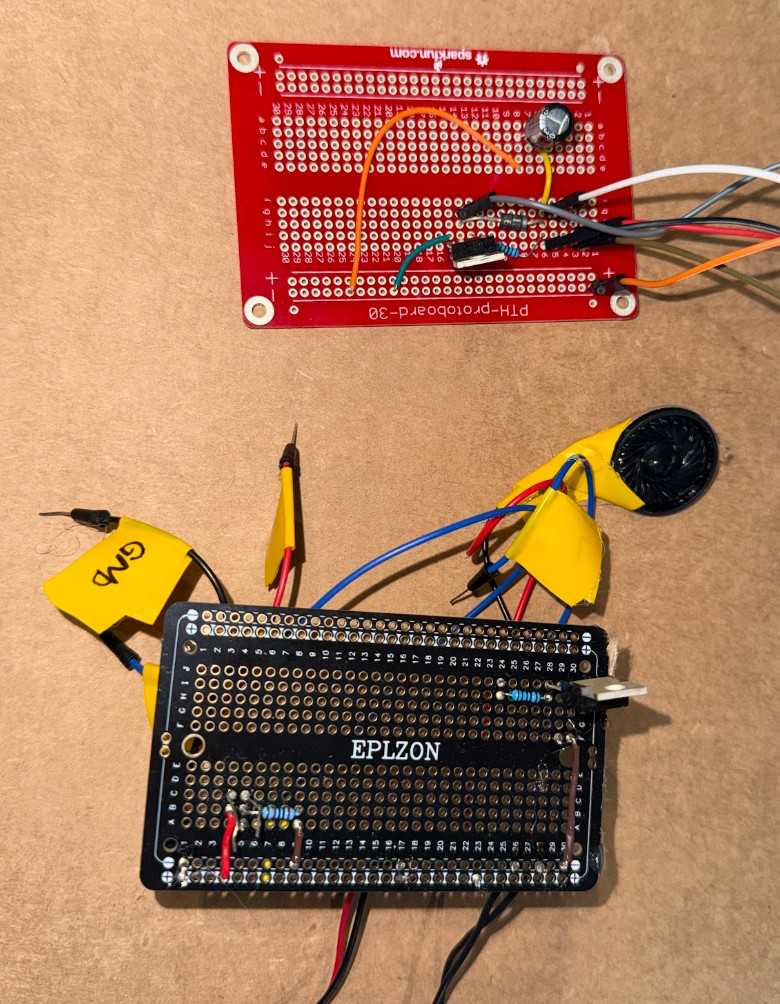
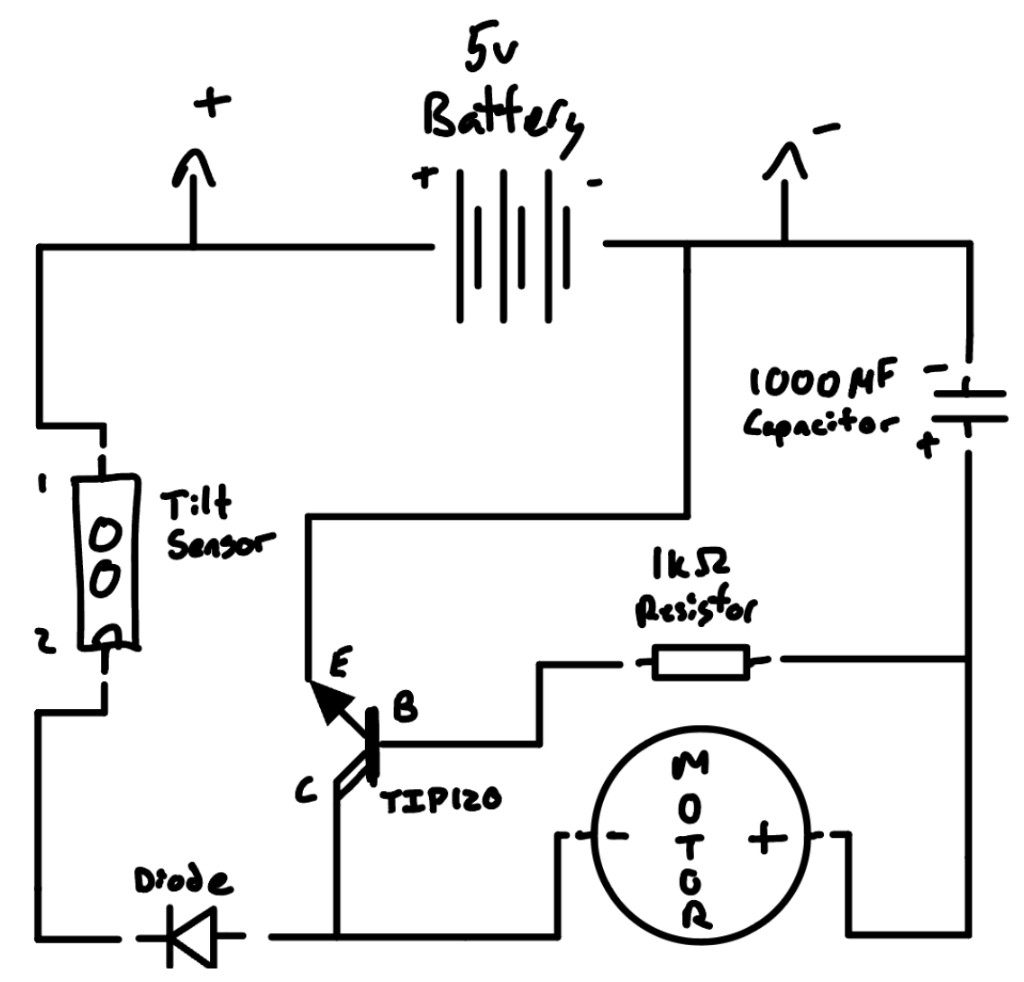
The Kilimanjaro Safaris portion used a different electromechanical interaction. A ball activated a tilt sensor, which triggered a TIP120 transistor/capacitor circuit to power a DC motor and spin a model hippo. The circuit incorporated a 5 V supply, 1000 µF capacitor, resistor, diode, tilt sensor, TIP120 transistor, and motor. Together, these mechanisms required us to integrate mechanical design, circuit construction, Arduino programming, sensor input, and actuator output into one continuous system.
Engineering Process
Building the machine required extensive prototyping, integration, and troubleshooting. Because every action depended on the previous one, small mechanical or electrical inconsistencies could propagate through the entire sequence. Our team encountered circuit designs that initially failed or proved impractical, requiring us to diagnose issues and revise our approach. One of our biggest takeaways was the value of top-down troubleshooting: identifying likely root causes before spending time testing individual components.
Integration extended beyond our four-person team. Since the Animal Kingdom build was only one section of a larger machine, we also had to coordinate interfaces with the other park teams so that the complete Disney World machine functioned as a continuous sequence. By the final demonstration, our design successfully completed all of its objectives and ran with zero failures during the expedition.
Final Design & Demonstration